Introduction:
Employee surveys are invaluable tools for organizations seeking to understand the sentiments and experiences of their workforce. However, the effectiveness of these surveys hinges on their design. In this blog, we’ll explore the key elements and best practices for designing employee surveys that yield meaningful insights, drive positive change, and foster a workplace culture that prioritizes employee well-being and engagement.
- Clearly Defined Objectives:Begin the survey design process by establishing clear and specific objectives. What insights are you seeking? Whether it’s gauging employee satisfaction, identifying areas for improvement, or assessing communication effectiveness, defining precise objectives ensures focused survey questions and actionable results.
- Tailored Questions:Craft survey questions that align with the identified objectives. Questions should be clear, concise, and relevant to the employee experience. Tailor questions to capture insights on specific aspects of the workplace, such as leadership effectiveness, team collaboration, or work-life balance. Avoid ambiguity to elicit accurate and insightful responses.
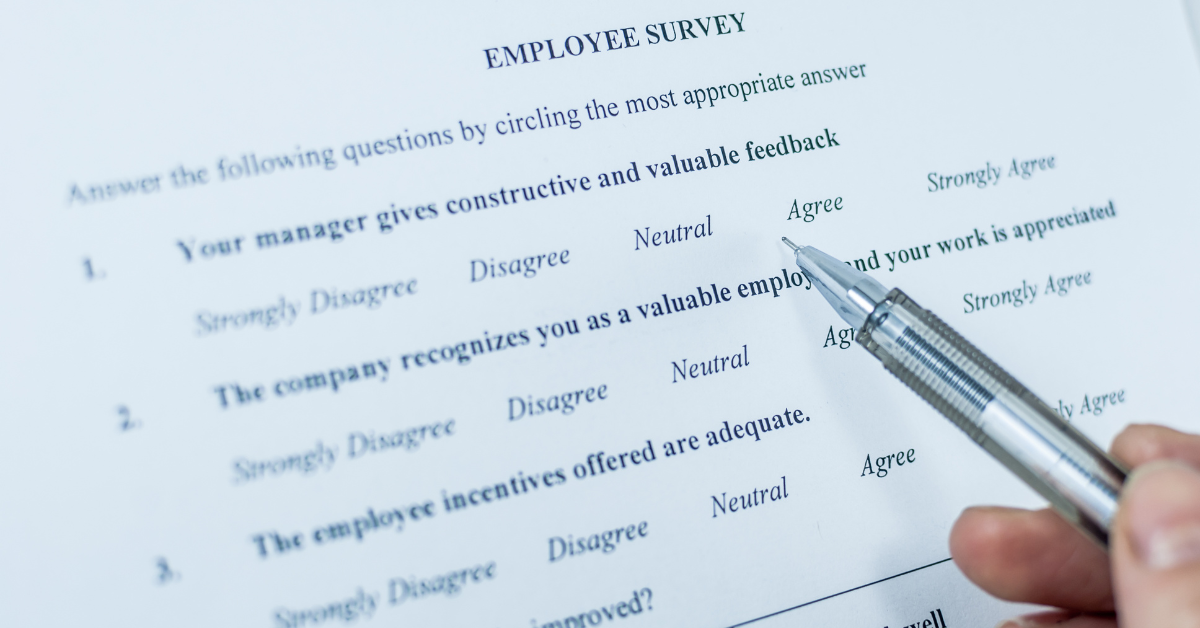
- Balanced Mix of Question Types:Employ a mix of question types to gather comprehensive data. Include multiple-choice questions, Likert scales, and open-ended questions. While closed-ended questions provide quantifiable data, open-ended questions offer qualitative insights, allowing employees to express their thoughts in their own words.
- Consideration for Survey Length:Respect your employees’ time by keeping the survey concise. Strive for a balance between gathering sufficient information and not overwhelming participants. A well-structured survey, with a clear progression and a reasonable time commitment, increases the likelihood of employee participation and honest responses.
- Anonymous Feedback Option:Foster candid responses by providing an option for anonymous feedback. Ensuring confidentiality encourages employees to express their opinions freely, especially on sensitive or critical topics. Anonymous responses contribute to a more accurate reflection of workforce sentiment.
- Pre-Communication and Transparency:Communicate the purpose and benefits of the survey to employees before its launch. Emphasize that their feedback is valuable for shaping positive changes within the organization. Transparency builds trust and encourages active participation, as employees understand the survey’s impact on the workplace.
- Regular Survey Cadence:Establish a regular cadence for surveys to maintain a pulse on employee sentiment. Whether quarterly, biannually, or annually, consistency enables organizations to track changes over time, identify trends, and implement targeted interventions based on evolving employee needs.
- Thorough Analysis and Actionable Insights:After collecting survey responses, conduct a thorough analysis to extract actionable insights. Identify trends, patterns, and areas for improvement. Share the results transparently with employees and outline concrete actions that will be taken in response to their feedback.
Conclusion:
Designing effective employee surveys is not just about gathering data; it’s about creating a mechanism for positive change. By setting clear objectives, crafting tailored questions, considering survey length, providing anonymity, communicating transparently, maintaining a regular cadence, and extracting actionable insights, organizations can leverage employee surveys as powerful tools for enhancing workplace satisfaction, engagement, and overall effectiveness.
#EmployeeSurveys #EmployeeFeedback #WorkplaceInsights #SurveyDesign #EmployeeExperience #EmployeeEngagement #HRBestPractices #WorkplaceWellbeing #FeedbackCulture #OrganizationalImprovement #SurveyObjectives #EmployeeSentiment #DataDrivenDecisions #TransparentLeadership